
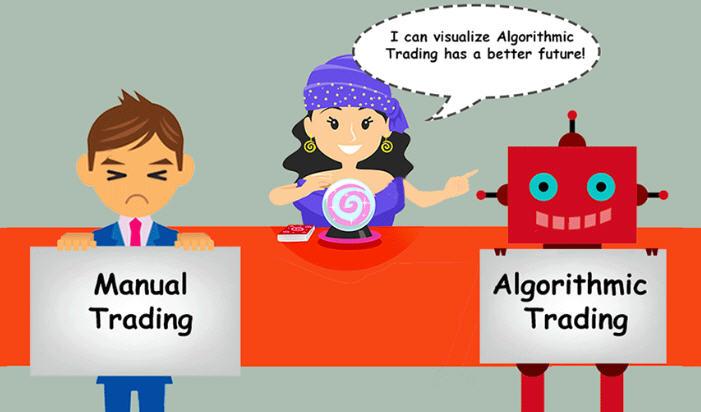

Meta description: Discover why most retail forex traders lose money, and how automated trading, copy trading, and EAs address the real reasons manual trading fails.
If you’ve spent any time researching forex trading, you’ve probably come across some version of the same statistic: roughly 95% of retail traders lose money over time. It’s a sobering number, and it’s tempting to assume it means trading itself is a losing game. It isn’t. What that statistic actually reveals is something more specific — and more fixable — than most people realize.
It’s Not the Strategies. It’s the Execution.
Ask any experienced trader what separates consistently profitable traders from the rest, and very few will point to some secret indicator or hidden strategy. Most will point to discipline — the ability to follow a plan exactly, trade after trade, without letting emotion override the rules.
That sounds simple. In practice, it’s brutally hard. Here’s why:
Fear cuts winners short. A trade moves into profit, and instead of letting it run to its planned target, the trader closes it early out of fear the gain will disappear. Multiply that across hundreds of trades, and a strategy that should be profitable on paper quietly underperforms in real life.
Greed extends losers. The inverse problem: a trade hits its stop-loss level, but the trader moves the stop further away, hoping the market will “come back.” Sometimes it does. Often it doesn’t — and a small, planned loss becomes a large, unplanned one.
Fatigue causes missed setups. Forex trades 24 hours a day, five days a week. The best setups don’t politely wait for convenient hours. A trader who can’t watch the London or New York session because they’re asleep or at work simply misses opportunities a system wouldn’t.
Revenge trading compounds losses. After a loss, it’s tempting to jump back in immediately to “win it back.” This is one of the most destructive patterns in retail trading — it replaces a tested strategy with an emotional reaction.
The Common Thread: Humans Are Inconsistent
None of the problems above are strategy problems. They’re consistency problems. A strategy that wins 55% of the time with proper risk management can be profitable over a large enough sample of trades — but only if it’s executed the same way every single time. The moment a trader starts making exceptions (“just this once, I’ll let it run further” or “this setup looks a bit different, I’ll skip the stop-loss”), the statistical edge the strategy was built on starts to break down.
This is precisely the gap that automated trading, copy trading, and Expert Advisors (EAs) are designed to close.
How Automation Addresses the Real Problem
Automated systems don’t get scared or greedy. An EA programmed to exit at a specific target will exit at that target — not two pips early because the trader got nervous, and not later because the trader got hopeful.
Automation doesn’t sleep. A properly configured EA or copy trading connection can act on a 3am London-session move exactly as it would on a 3pm New York-session move. Market hours stop being a limiting factor.
Automation removes the “one more trade” impulse. There’s no revenge trading when there’s no manual finger on the trigger. The system executes its defined rules — nothing more, nothing less.
Copy trading extends this further by letting you follow an already-built, already-tested strategy rather than needing to develop the discipline (and the strategy) entirely yourself.
What Automation Does Not Fix
It’s worth being honest here: automation doesn’t eliminate market risk. An EA or a copied strategy can still lose money — sometimes significant amounts — during unfavorable market conditions. What automation removes is execution risk: the gap between what a strategy is supposed to do and what a stressed, tired, or emotional human actually does under pressure.
Choosing a poorly designed EA, or copying a strategy without understanding its risk profile, can be just as damaging as undisciplined manual trading. The goal isn’t to blindly hand over control — it’s to combine a properly vetted, risk-managed system with the consistency that only automation can reliably provide.
The Bottom Line
The 95% statistic isn’t a verdict on whether trading can work. It’s a reflection of how difficult consistent execution is for humans operating under real financial and emotional pressure. Automated trading, copy trading, and EAs exist specifically to solve that execution problem — not by predicting markets better than a human could, but by doing exactly what they’re told, every single time, regardless of fear, greed, fatigue, or the urge for revenge.
If inconsistency has been the real obstacle in your own trading, that’s worth sitting with — because it’s usually not the strategy that needs fixing first.
Trading forex involves substantial risk of loss and is not suitable for all investors. This article is for educational purposes only and does not constitute financial advice.
[Explore Gold Strategies →] · [Explore Copy Trading Strategies →] · [Explore EA Trading →] · [Beginner to Professional Automated Trader Masterclass →]